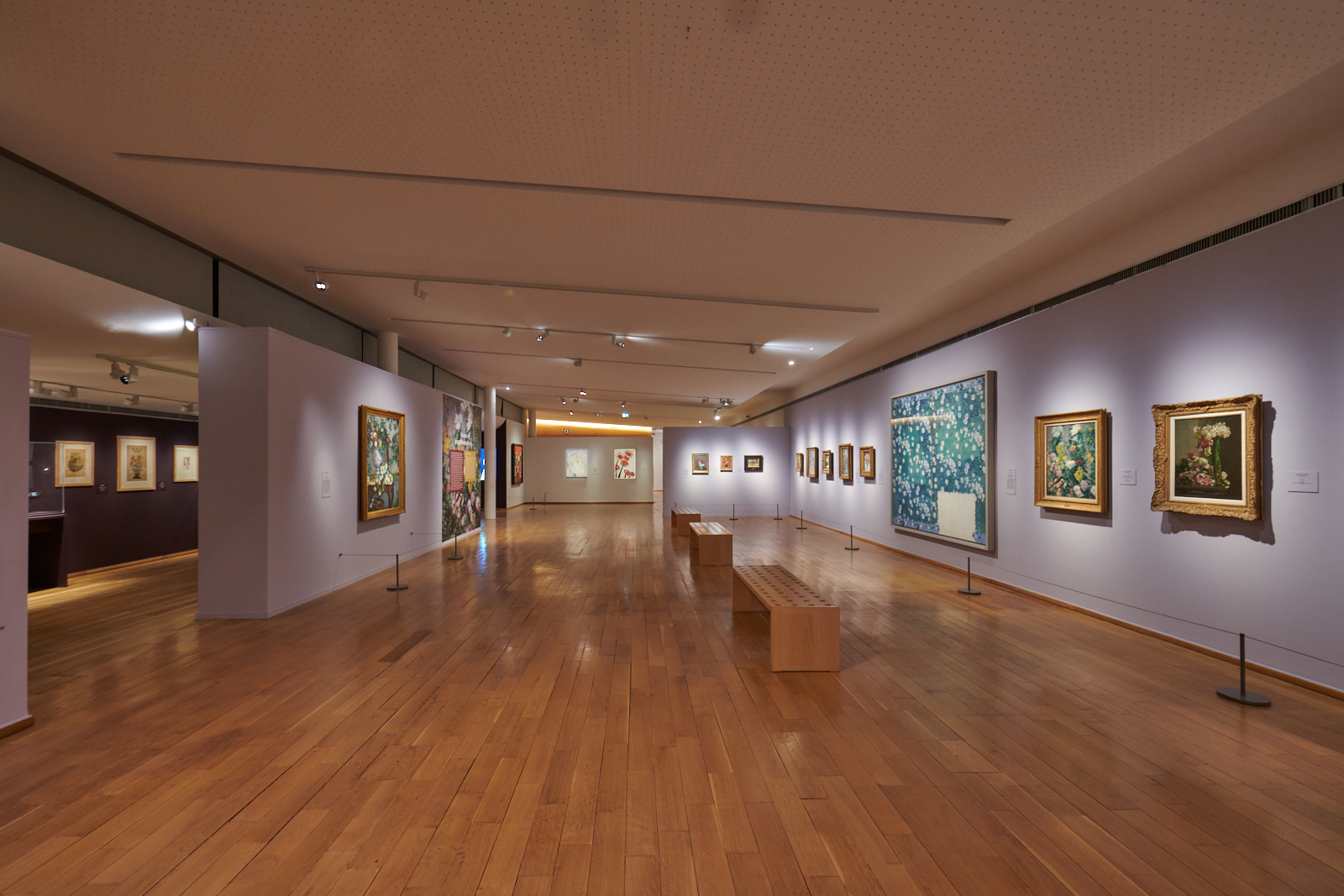
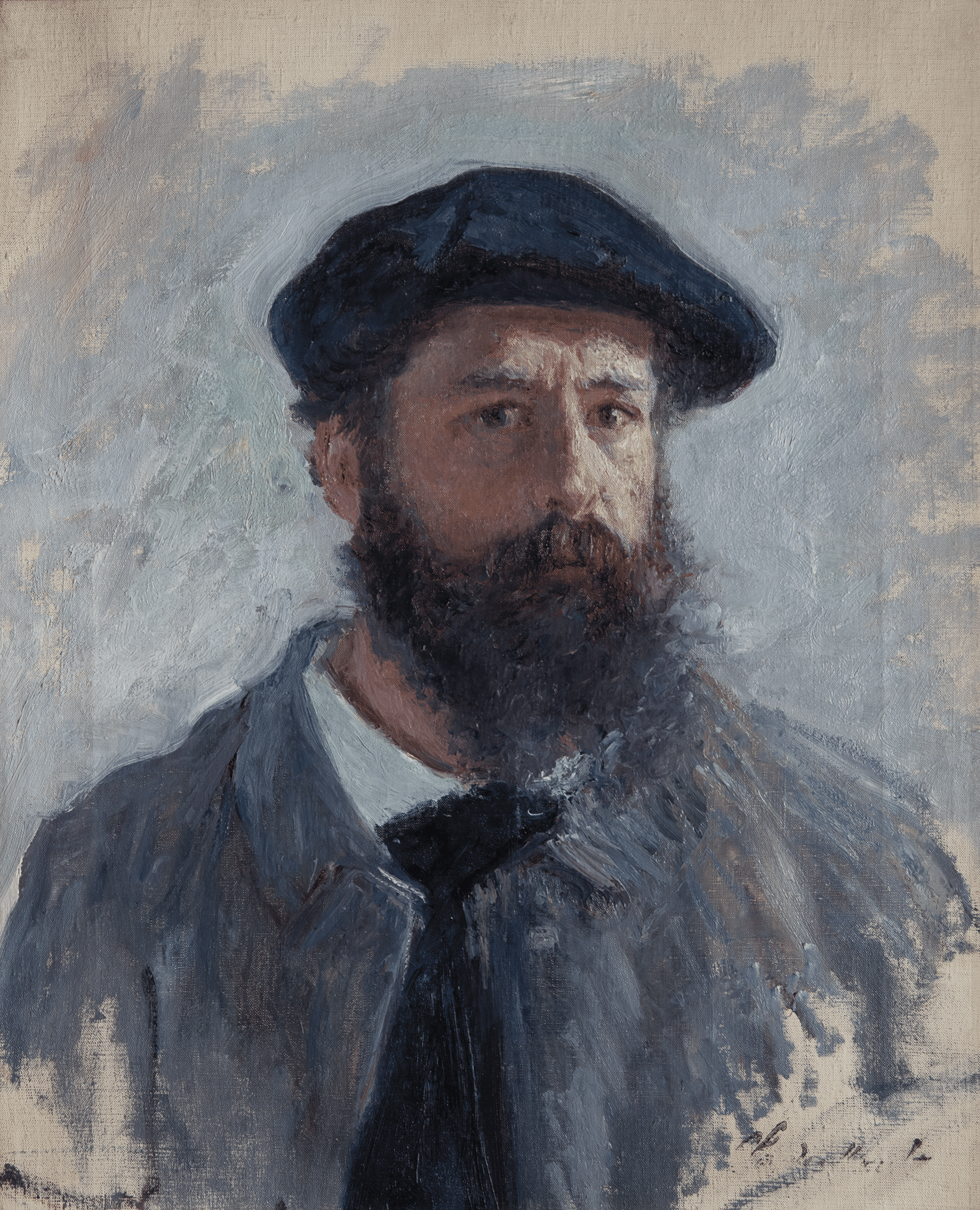
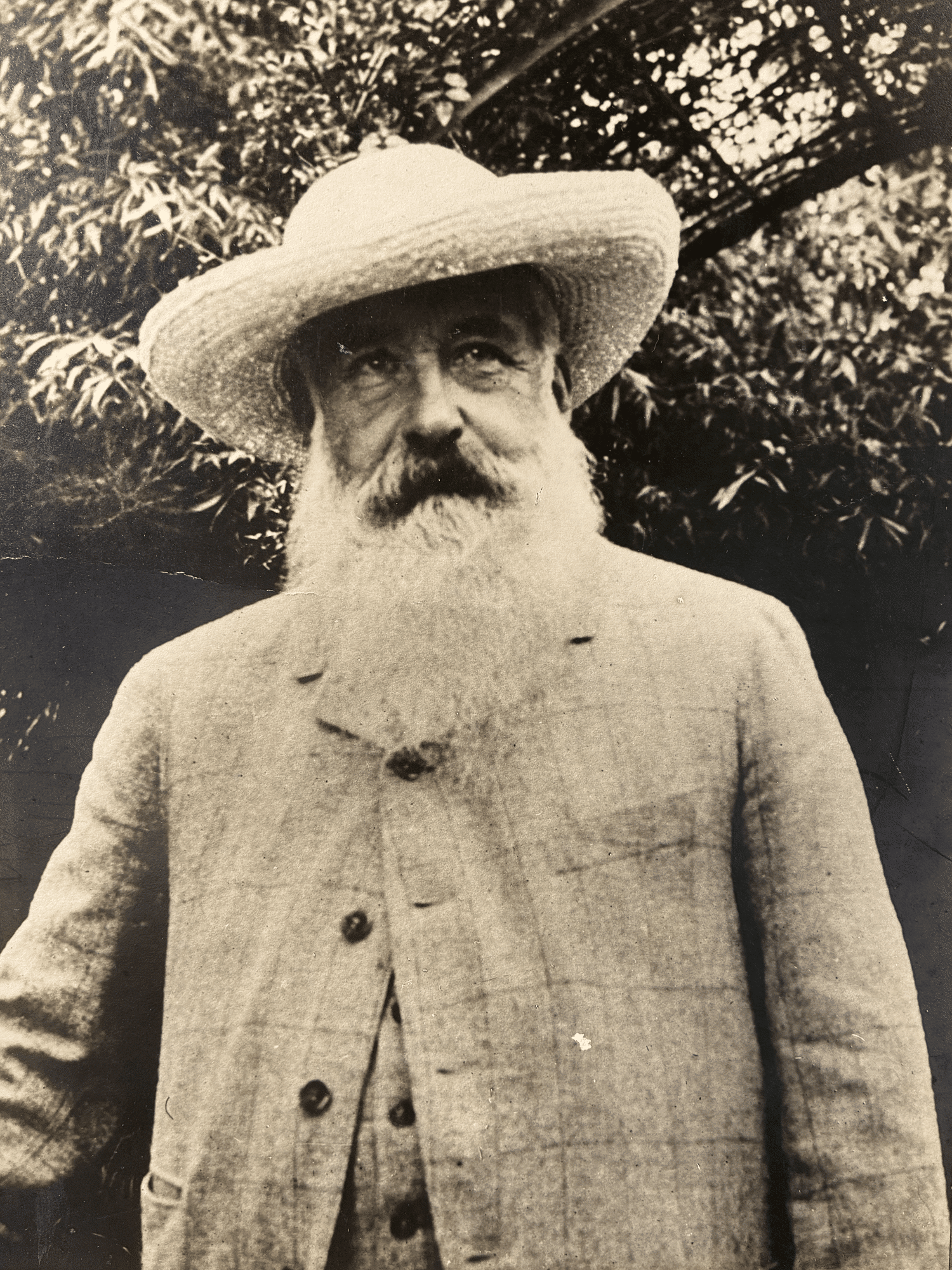
Visitor route EN : Exhibition “Monet in Giverny : Before the Water Lilies, 1883-1890”

On 29 April 1883, Claude Monet rented a house in Giverny, Le Pressoir, which he later bought, on 19 November 1890. He would live there until his death on 5 December 1926.
This was where he would develop his art for 43 years, tirelessly painting the countryside, but above all his garden, which he fashioned like a work of art in itself. Studies of the Giverny period have often focused on the canvases centred on the water-lily pond, and on the series he devoted to poplars, haystacks and dawn views of the Seine. Monet’s late period, which yielded works heralding abstraction, has also been carefully analysed.
However, there has been no exhibition devoted solely to Monet’s first years spent in Giverny. Bringing the artist’s paintings back to Giverny and the place where they were created is thus of considerable interest, for well before he created his famous “water garden” in the 1890s, Monet initially focused on the nature surrounding his house.
Map—Room A
Giverny is a small village located 75 kilometres north-west of Paris and 60 kilometres east of Rouen. Situated between the banks of the Seine and chalky hills, the site is unusual. The bottom of the valley is damp due to the proximity of the river and the presence of the Epte, and remains vulnerable to flooding. The village was bisected by the railway line linking Gisors with Pacy-sur-Eure. Agriculture dominated in the form of cereal farming, vineyards and 200 cider trees; there were three water mills on the Epte. On the hillside, all of the plots were cultivated.
In 1897, the American painter Guy Rose wrote an idyllic description of this charming site: “The village is on the road from Paris to Rouen, in the lovely Seine valley . . . A long winding road is bordered with plastered houses, whose lichen-covered, red-tiled roofs gleam opalescent red and green in sunlight, or look like faded mauve velvet in the shadow. High walls surround picturesque gardens; and long hillsides, checkered with patches of different vegetable growths, slope down to low flat meadows through which runs the river Epte bordered with stunted willows . . . poppies and violets are everywhere. Peasants . . . call a greeting as they sit or lie on the grass beside their grazing cattle, or drive their great Norman horses, made picturesque by high blue fur-trimmed collars.” (Pratt Institute Monthly, December 1897)
From Vétheuil to Giverny
When Monet arrived in Giverny in 1883, he had already travelled extensively.
Born in Paris, but brought up in Le Havre, he regularly returned to Normandy. He was already familiar with the region around Giverny: in 1868 he stayed in Bennecourt, where he painted his companion Camille on the banks of the Seine. After the Franco-Prussian War of 1870–71, Monet settled in Argenteuil (1872–78). These were years of struggle, when the artist had trouble living off his art. His dealer Paul Durand-Ruel supported him as best he could. Success did not come immediately.
From 1878 to 1881, he lived in Vétheuil. He rented a house by a road, at the entrance to the village, and he had a garden. “I have pitched my tent on the banks of the Seine at Vétheuil, a ravishing place,” Monet exclaimed in September 1878. There he created some iconic Impressionist works, exploring different views of the river, fields, hills, floods … Yet it was a time of hardship, during which he had endless difficulties supporting his family. A year after moving there, he was hit by tragedy: on 5 September 1879, Camille died. But Monet had to continue trying to support himself and he resumed his quest for landscapes, hoping to sell his paintings. Nevertheless, he was forced to leave Vétheuil, moving to Poissy in December 1881. With his new companion, Alice Hoschedé, his two sons Jean and Michel, and Alice’s six children, he found a large house to rent. He would stay there for 14 months, until April 1883, but never warmed to the place. He searched for a welcoming place in the country, between Vernon and La Roche-Guyon, he lingered at Giverny, where he moved in April 1883, as a tenant.
Along the banks of the Epte and the Seine
For Claude Monet, water was a permanent point of reference. From Le Havre to Giverny, from the Mediterranean to the Thames, throughout his life he frequented shores, riverbanks and coastlines. Indeed, it is tempting to think that his move to Giverny stemmed from his need for access to water, and to the sea, via the Seine.
In order to paint and get about on the river, Monet used his studio boat. He used it to paint his Mornings on the Seine (1897), and also to depict Bennecourt and Jeufosse, and to navigate between the Seine islands, which were more numerous in his time than they are today.
Water can sometimes be invasive. Flooding was frequent in winter and the marsh in Giverny, which was covered with irises in the spring, became impassable in the autumn. But at the coldest point of winter it also turned into a wonderful ice rink. Jean-Pierre Hoschedé recounted how much fun he had with his half-brother, Michel, skating on the frozen marsh. Water was essential for the creation of Monet’s pond in Giverny. It would cause him no end of problems with the inhabitants of the village, the municipal council being chary about this project. On 24 July 1893, the prefecture eventually gave him permission to divert a branch of the Epte, which was indispensable for aquatic plants.
Through fields: haystacks and poppies
In the 1870s, when he lived in Argenteuil, Monet had enjoyed painting poppies. When he arrived in Giverny, he tried to paint joyful, picturesque motifs that would be attractive to collectors. From 1885, Monet painted various fields teeming with the bright, red flowers, located between Giverny and Limetz and also in the heart of the village, near his home. But contrary to the Argenteuil period, he avoided putting human figures in these landscapes. His experiments revolved around the effects of light playing on the flowers and sites he observed. In 1890, he took this approach further in a series painted on the hills of Giverny, near the Gros Chêne wood: these images of oat fields full of poppies reflect his interest in interpreting the variations in the different times of the day. That same year, he became fascinated by a motif that he discovered in 1884 and painted throughout these early years in Giverny: the haystacks that dotted the fields in the springtime. In 1888, after the harvests, another type of stack attracted his attention: the large grainstacks created by the local farmers in order to conserve the harvested ears, while waiting for them to be threshed. Several of them were erected on the Clos Morin, not far from his house, on the spot where the musée des impressionnismes stands today. Two years later, between the end of the summer of 1890 and early 1891, it was these large stacks that would inspire the series of Grainstacks, an ensemble of 25 now legendary paintings. Like the Cathedrals and Poplars, this series, which he displayed at the gallery of his dealer Paul-Durant Ruel in May 1891, became a landmark in art history, ushering in modernity.
Far from Giverny: Monet’s voyages
Although age and the attractions of the garden gradually led Monet to make fewer trips, in the years following his move to the village, his painting campaigns often kept him away from Giverny.
As early as the Vétheuil period, he rediscovered the subjects of the Normandy coast, the landscapes of his childhood. Up until 1886, he returned there regularly to paint beaches and cliffs on the Channel coast, at Varengeville, Pourville and above all Étretat. The railway stations at Giverny and Vernon facilitated these excursions, and enabled him to get to Paris easily.
Thus, he got to discover the Mediterranean coast thanks to Renoir, who returned enchanted by his first trip to Italy. In late 1883, the two Impressionists travelled for two weeks between Marseille and Genoa. A few weeks after they got back, drawn to the region’s dazzling light, Monet returned there to work on his own, at Bordighera. In 1888, he sought the colours of the south once again at Cap d’Antibes, a favourite of his friend Maupassant. The precise reason for his trip to Belle-Île in 1886 is less well known, but Octave Mirbeau, who was renting a house on Noirmoutier at the time, may have told him about its wild beauty. That same year, an invitation from the diplomat Paul d’Estournelles de Constant may have prompted him to explore the tulip fields of the Netherlands. Finally, in 1889, the poet Maurice Rollinat’s hospitality enabled Monet to paint its dark slopes, in sharp contrast to the smiling countryside of Giverny.
Before the water-lilies: the beginnings of the garden
In Le Pressoir, Monet had found a place capable of housing his entire family in comfort, while offering him a large domain where he could give free rein to his love of flowers. The house opened onto a walled garden covering almost one hectare, planted with fruit trees and ornamental trees, and structured by pruned boxwood hedges and long beds flanking a central path.
As soon as he moved in, Monet set about planting the flowers that he liked to paint: anemones, chrysanthemums, dahlias, clematis and peonies. The garden became the object of constant attention, including during his travels. Assembled into bouquets, the blooms from the garden inspired the decorative panels that he created for the apartment of his dealer, Paul Durand-Ruel. However, it was not until 1887 that Monet started to paint the garden itself, initially choosing the clematis and peonies as subjects.
The acquisition of the house and the land, on 19 November 1890, enabled him to take this venture further as he gradually transformed the Norman walled garden into a luxuriant floral extravaganza.
In 1893, Monet bought a plot on the other side of the road and the railway line in order to create a pond planted with water-lilies. The acquisition of an adjoining plot in 1901 enabled him to enlarge the pond, giving it its present-day appearance. These plots, traversed by the Ru, a branch of the Epte which ran through the village, provided the water required to feed the pond.
Like the garden as a whole, the water-lily pond thus embodied the convergence of Monet’s dream, enriched, and by the images of Japan that lined the walls of the house.
See more about the exhibition :
Monet in Giverny : Before the Water Lilies, 1883-1890
Page parente : Découvrir le musée
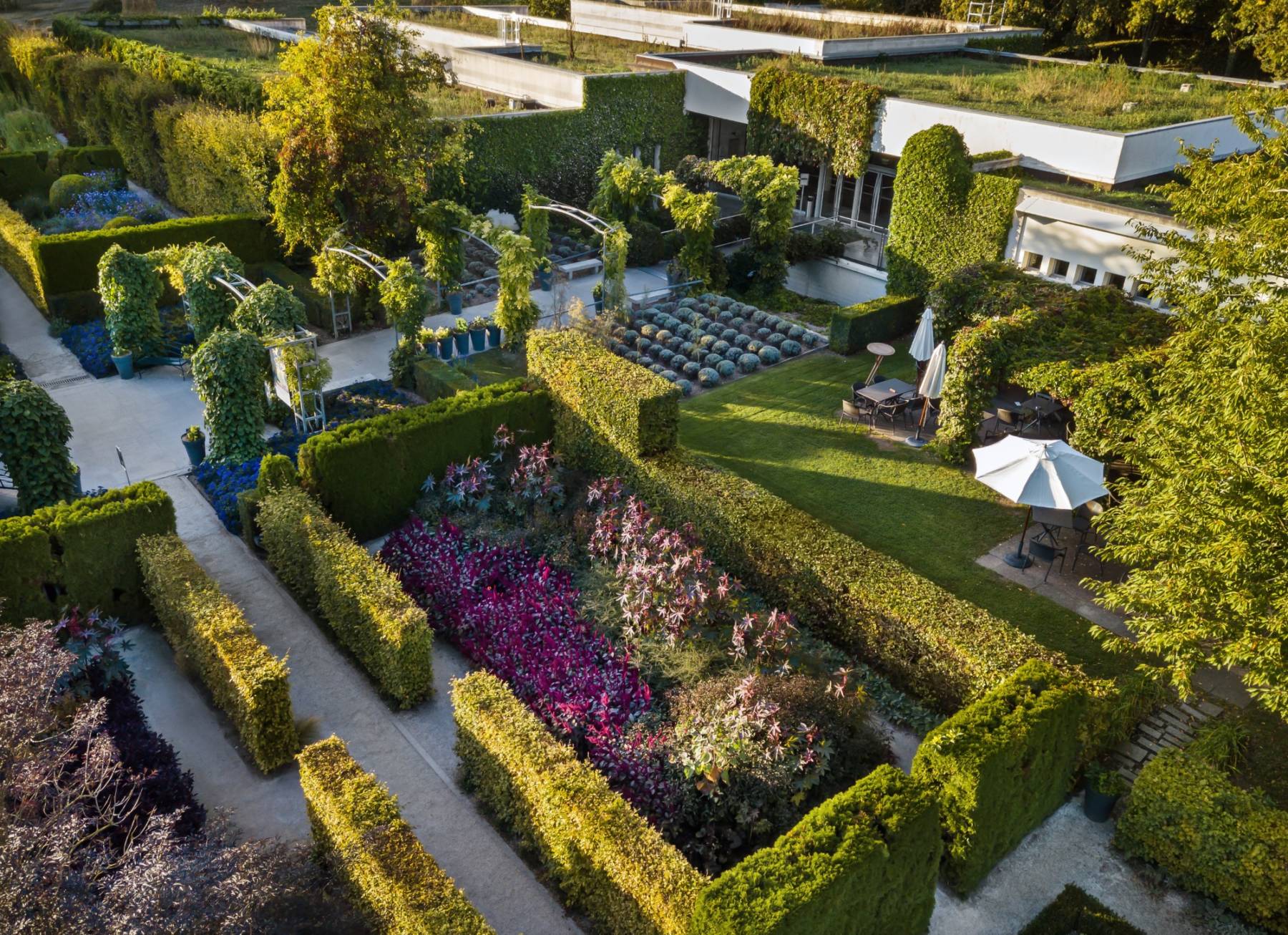
Le jardin
En savoir plus
Qui sommes-nous ?
En savoir plus