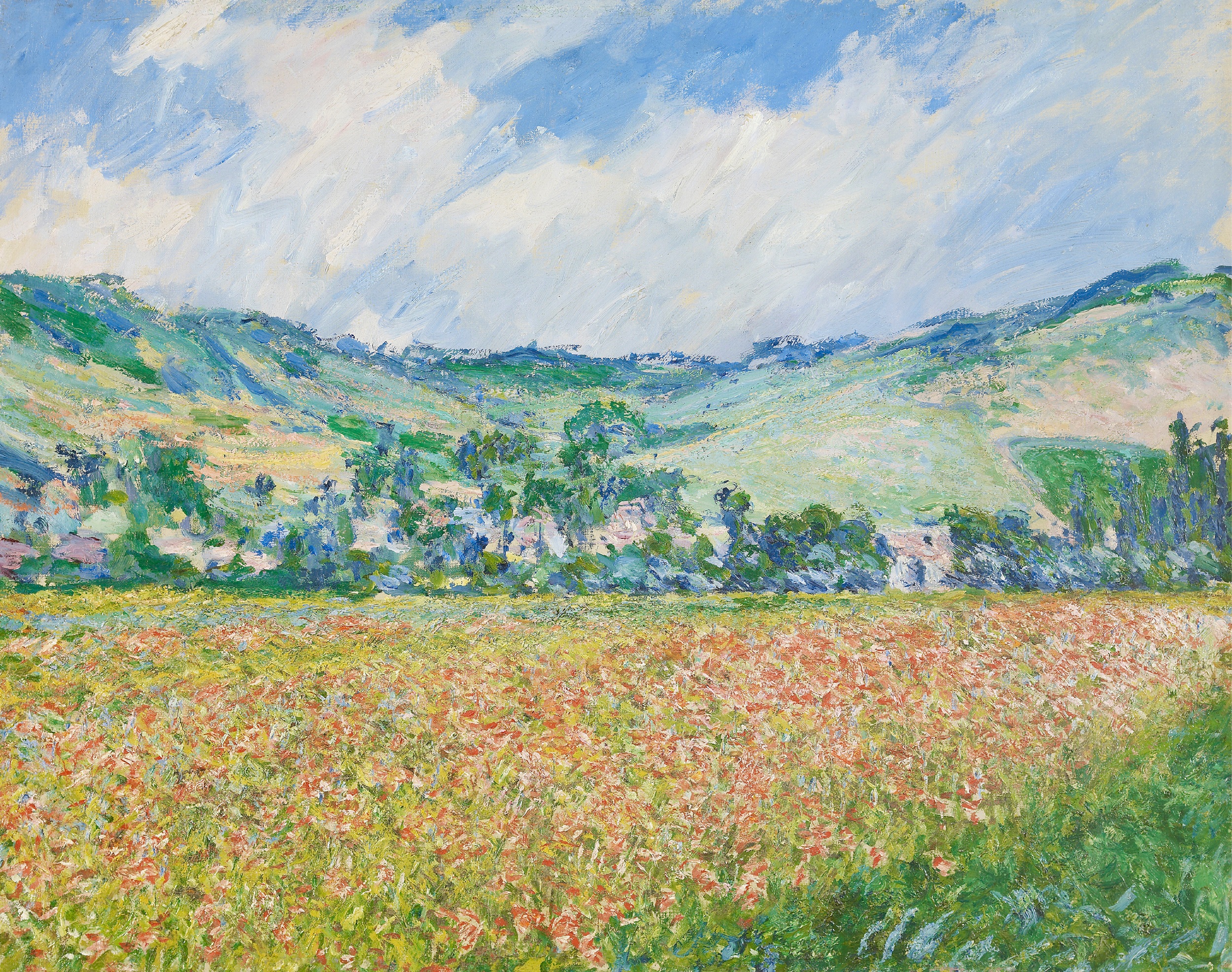
Paris, musée d’Orsay, en dépôt au musée des Beaux-Arts de Rouen © RMN-Grand Palais (Musée d’Orsay) / Martine Beck-Coppola
About
To mark the centenary of Claude Monet’s passing (on 5 December 1926), the Musée des impressionnismes Giverny presents an exceptional exhibition devoted to the artist’s early years in the village of Giverny, from his arrival in 1883 to the end of 1890, when he became the owner of his house and began designing his garden.
During these formative years, Monet explored his new surroundings: poppies, poplars, meadows and hills, the banks of the Epte and the Seine, all part of a landscape shaped by rain and mist, sunlight and shifting skies.
The exhibition aims to bring back to their very sites of creation around thirty works through which the master of Impressionism made the village and its surroundings his own, offering visitors the magical experience of seeing the landscapes of Giverny through Monet’s eyes, both within the galleries and beyond them.
Before the Water Lilies. Monet discovers Giverny, 1883-1890
On April 29, 1883, Claude Monet moved to Giverny. He would spend the final forty-three years of his life there, tirelessly painting the countryside and, above all, the garden he cultivated as a total work of art. While history often remembers his late Water Lilies and his journey toward abstraction, the foundational years of his time in Giverny are essential to understanding his evolution as a painter. Surprisingly, these early years have never before been the subject of a dedicated exhibition.
Before conceiving his famous water garden, Monet immersed himself in the surrounding nature. This transition was not without its challenges: the artist had to adapt to rural life, provide for a large family, and overcome periods of deep uncertainty. Yet, as he moved from a precarious tenant to a landowner in 1890, he gradually claimed this territory as his own. Whether in his boat on the Seine or walking through the sunken lanes of the village, he chased the light and laid the groundwork for his most celebrated series.
From Vétheuil to Giverny
By the time he arrived in Giverny, Monet had traveled extensively and faced significant hardships. From 1878 to 1881, he lived in Vétheuil, where he created iconic Impressionist works, painting the river, the village church, and the pastoral banks of the Seine. Despite this artistic output, it was a time of struggle, as he lacked the resources to support his family. A year after settling there, tragedy struck: his wife, Camille, passed away on September 5, 1879, at the age of only thirty-two.
Following a disappointing stay in Poissy, Monet sought a landscape that would recapture the happy days he once knew in Argenteuil. He chose Giverny as the place to build a new life with his two sons, his partner Alice Hoschedé, and her six children. There, he rented “Le Pressoir,” a house large enough to accommodate their blended family.
Along the Epte and the Seine
For Monet, water was a permanent compass. Wherever he lived, he sought out its reflections and its fluidity. In Giverny, he returned to the Seine, navigating it in his studio-boat to capture the morning mists and the banks of the nearby islands.
Within the village itself, water is more discreet. It flows through the Epte, whose branches irrigate the meadows and once powered the local mills. Monet learned to master this landscape, painting everything from the austere hamlet of Falaise to the poplars shimmering in the light of the setting sun.
Across the Fields: Haystacks and Poppies
Upon his arrival, Monet began exploring Giverny’s pastoral motifs, gradually moving away from the human figure. Between 1885 and 1890, poppy fields became a favorite subject, allowing him to study how atmospheric variations transformed the brilliant red of the flowers.
He also turned his attention to the haystacks and grainstacks that dotted the fields. What began as a simple element of the agricultural landscape became the heart of an artistic revolution. Between 1890 and 1891, he painted his famous Grainstacks series: twenty-five canvases capturing the passage of time on a single motif.
Beyond Giverny: Monet’s Travels
Though deeply attached to his home, Monet regularly traveled to find fresh inspiration. Until 1886, he frequently returned to the Normandy coast of his childhood to paint the rugged cliffs of Étretat and Pourville.
The expanding railway network allowed him to venture even further. He discovered the radiant light of the Mediterranean in Bordighera and Antibes, the vibrant tulip fields of the Netherlands, the wild coastlines of Belle-Île-en-Mer, and the somber beauty of the Creuse Valley.
Before the Water Lilies: The Garden’s Beginnings
At “Le Pressoir,” Monet found a home that could comfortably house his family while providing a vast canvas for his love of flowers. The original garden was an orchard where, from the moment he arrived, he began planting anemones, peonies, clematis, chrysanthemums, and dahlias.
After finally purchasing the property in 1890, he was able to complete the transformation of the Norman orchard into a lush flower garden. In 1893, he acquired a plot of land across the railroad tracks to create his water garden. The water lily pond would become the ultimate synthesis of Monet’s vision, a blend of his travels in Italy and Holland, the Japanese prints that lined his walls, and the tranquil waters and welcoming meadows of Giverny itself.
Curators: Cyrille Sciama, General Director of the Musée des Impressionnismes Giverny and Chief Heritage Curator, and Marie Delbarre, Research Assistant at the Musée des impressionnismes Giverny
With the support of the Musée Marmottan Monet and the Académie des Beaux-Arts, Paris

Practical information
Images
Zoom on the works
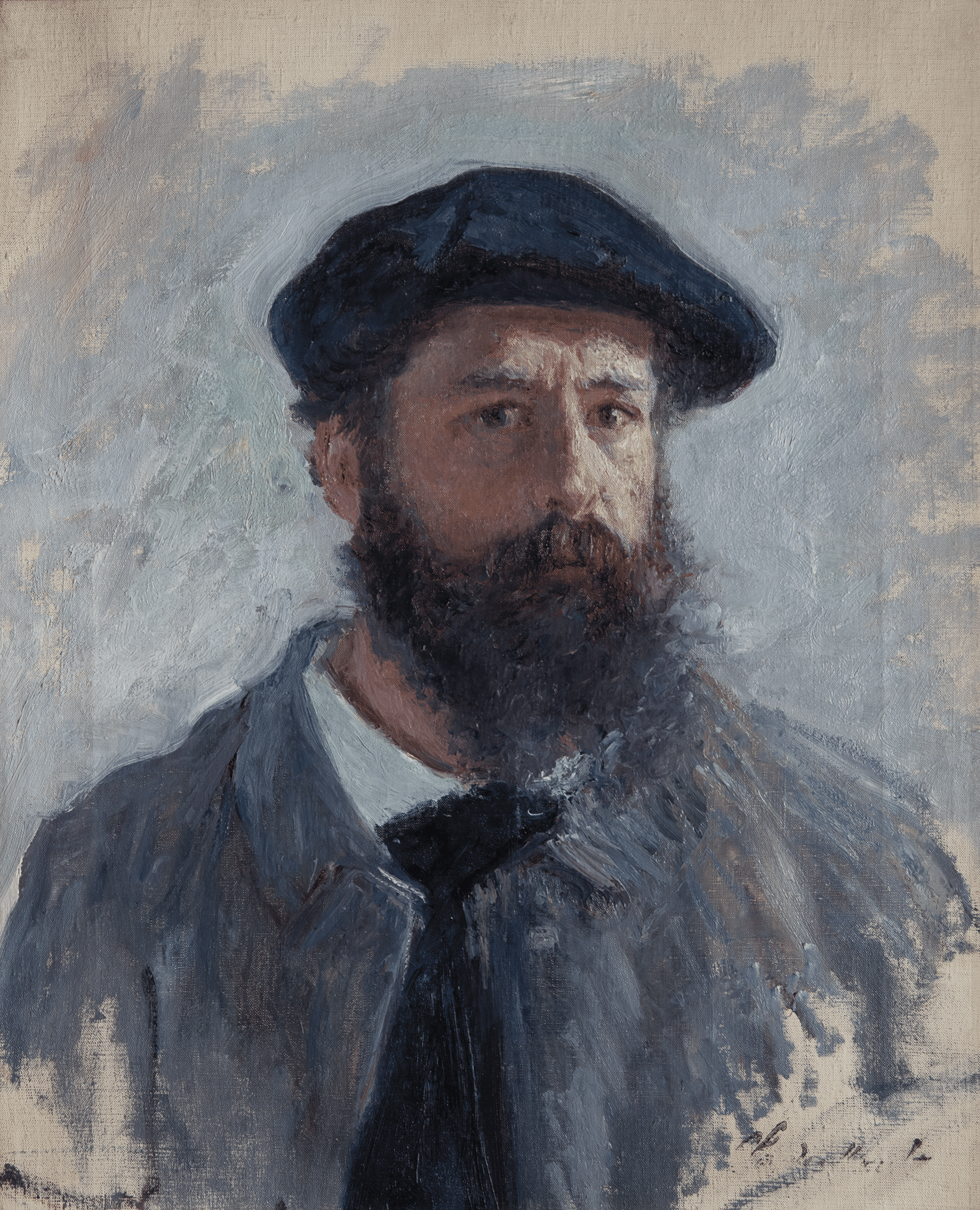
- Claude Monet (1840-1926)
- Autoportrait au béret, 1886.
- Huile sur toile, 56 x 46 cm
Collection particulière - © Tous droits réservés / Roy fox Fine Art Photography
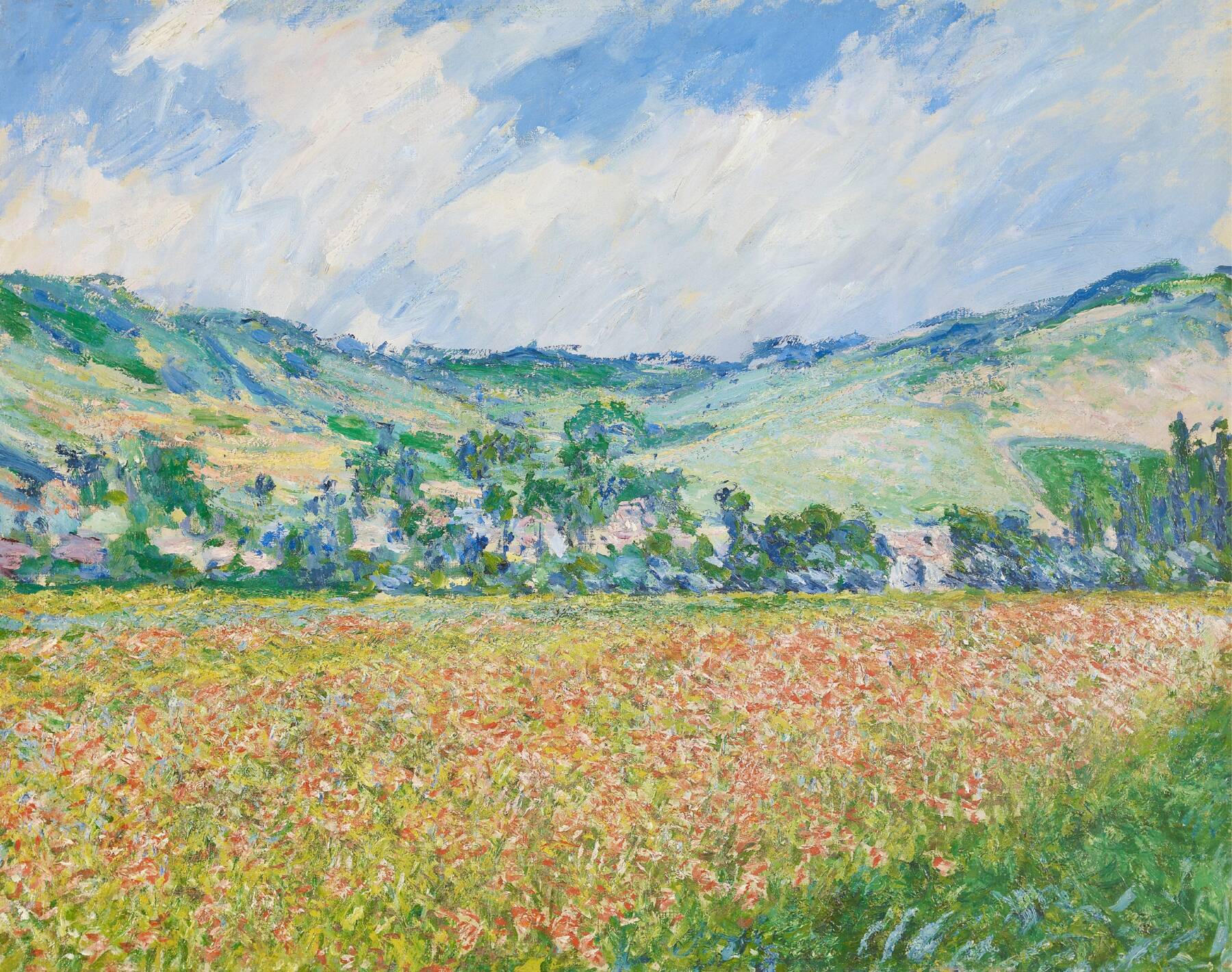
- Claude Monet (1840-1926)
- Champ de coquelicots. Environs de Giverny, 1885.
- Huile sur toile, 65,5 x 81 cm
Paris, musée d’Orsay, en dépôt au musée des Beaux-Arts de Rouen, MNR 639, œuvre récupérée à la fin de la Seconde Guerre mondiale, attribuée au musée du Louvre en 1951, déposée au musée des Beaux-Arts de Rouen en 1954 puis confiée à la garde du musée d’Orsay en 1986. Historique incomplet entre 1933 et 1945 en l’état des recherches actuelles. En cas de spoliation, l’œuvre sera restituée à ses légitimes propriétaires. - © RMN-Grand Palais (Musée d’Orsay) / Martine Beck-Coppola
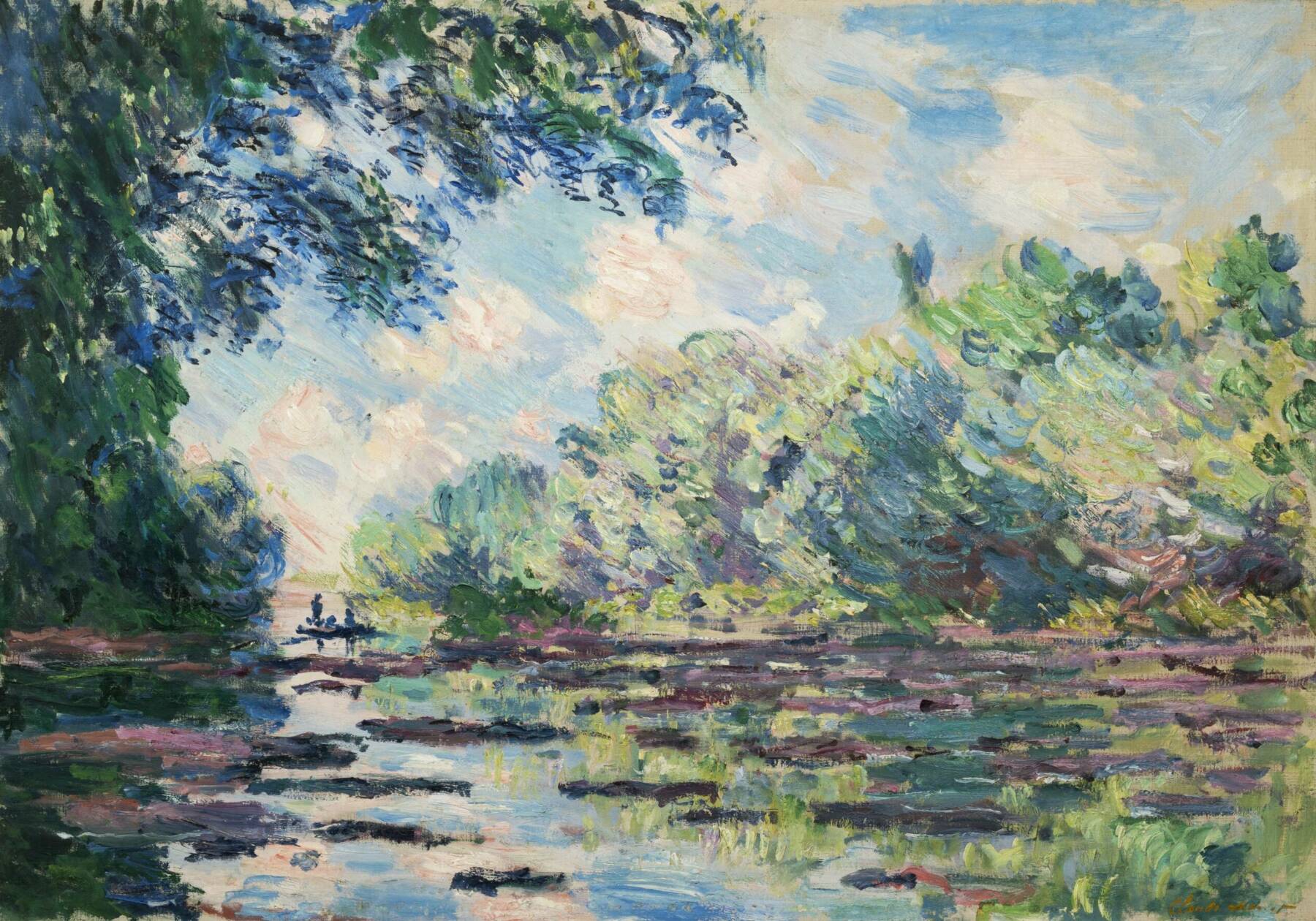
- Claude Monet (1840-1926)
- Bras de Seine à Giverny, 1885.
- Huile sur toile, 66 × 93 cm
Paris, musée Marmottan Monet, legs Michel Monet, 1966, inv. 5175 - © musée Marmottan Monet / Studio Christian Baraja SLB
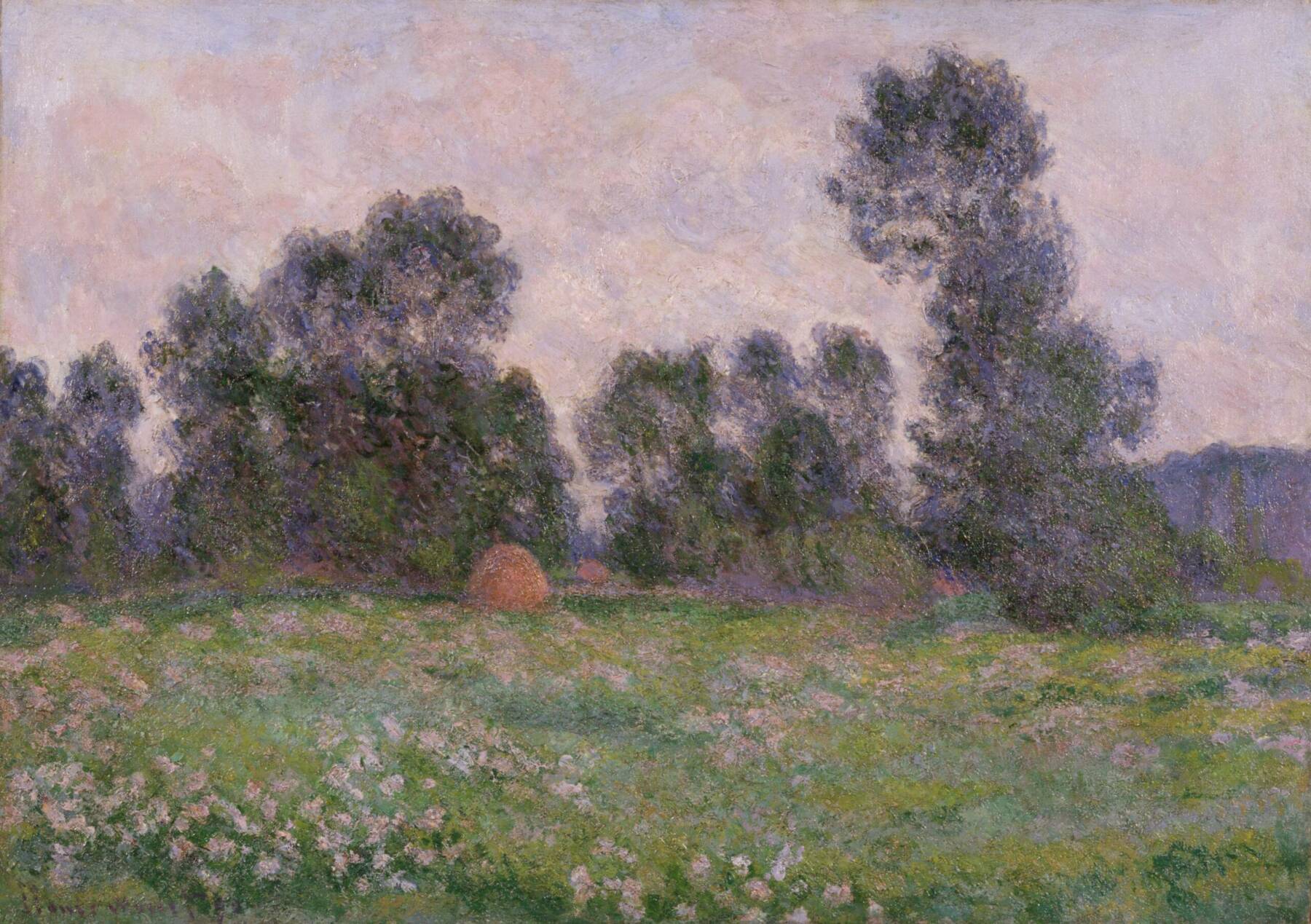
- Claude Monet (1840-1926)
- Prairie à Giverny, 1890.
- Huile sur toile, 73 x 92 cm
Fukushima Prefectural Museum of Art - © Fukushima Prefectural Museum of Art
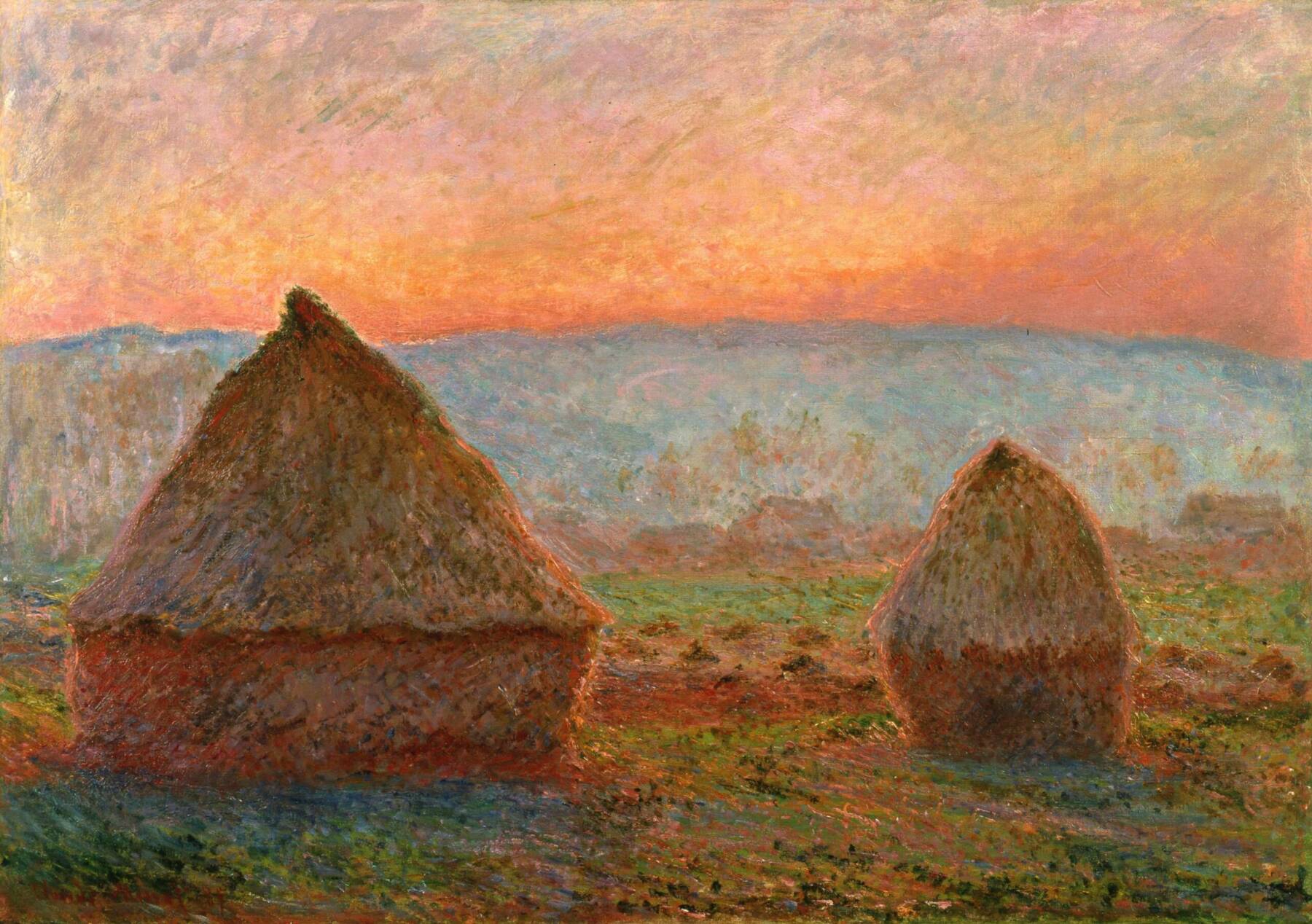
- Claude Monet (1840-1926)
- Les Meules à Giverny, soleil couchant, 1888-1889.
- Huile sur toile, 65 x 92 cm
Saitama, The Museum of Modern Art
- © Saitama, The Museum of Modern Art
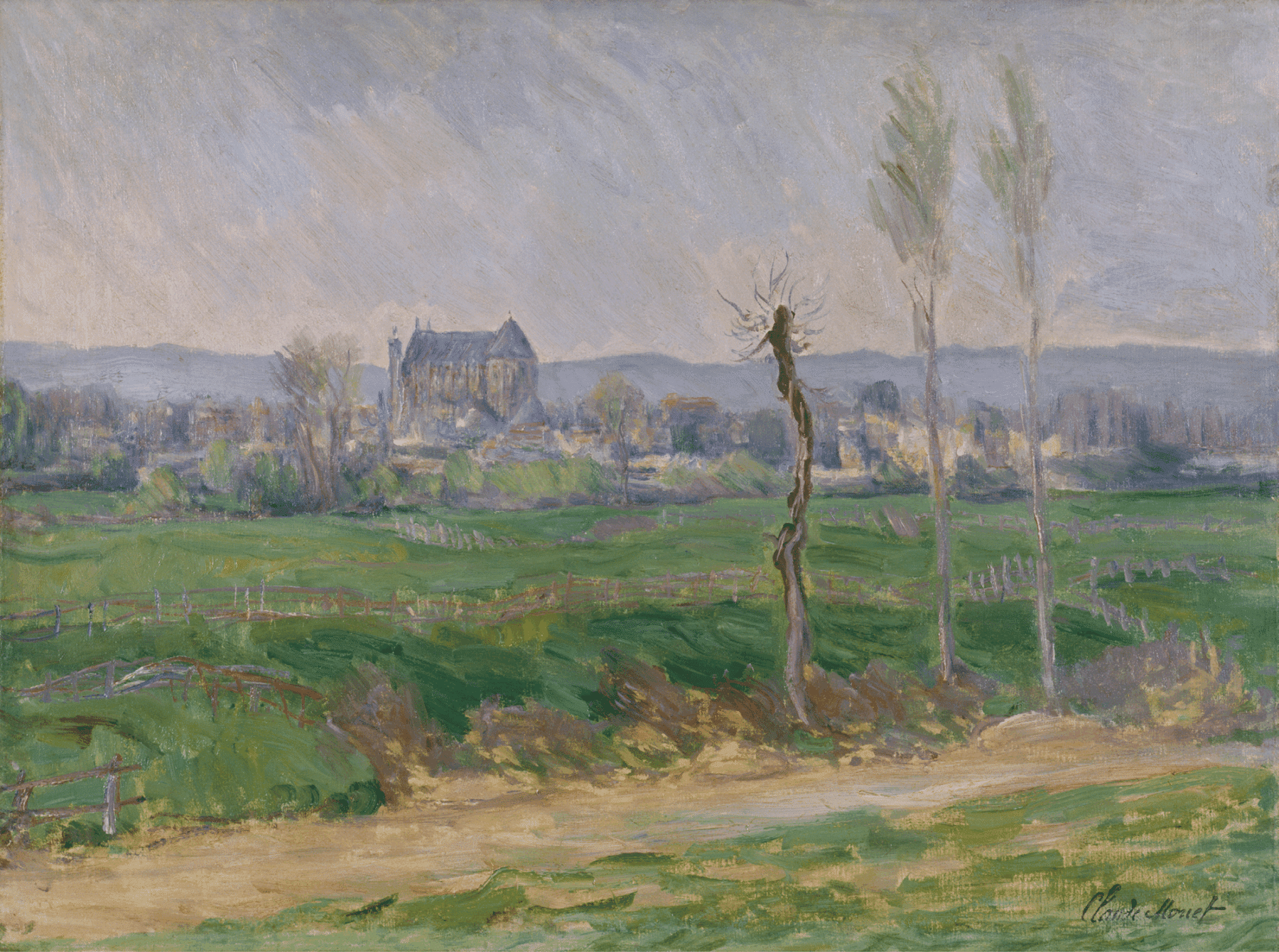
- Claude Monet (1840-1926)
- Panorama de Vernon, 1886.
- Huile sur toile, 60,3 × 79,4 cm
- © Norfolk, Chrysler Museum of Art
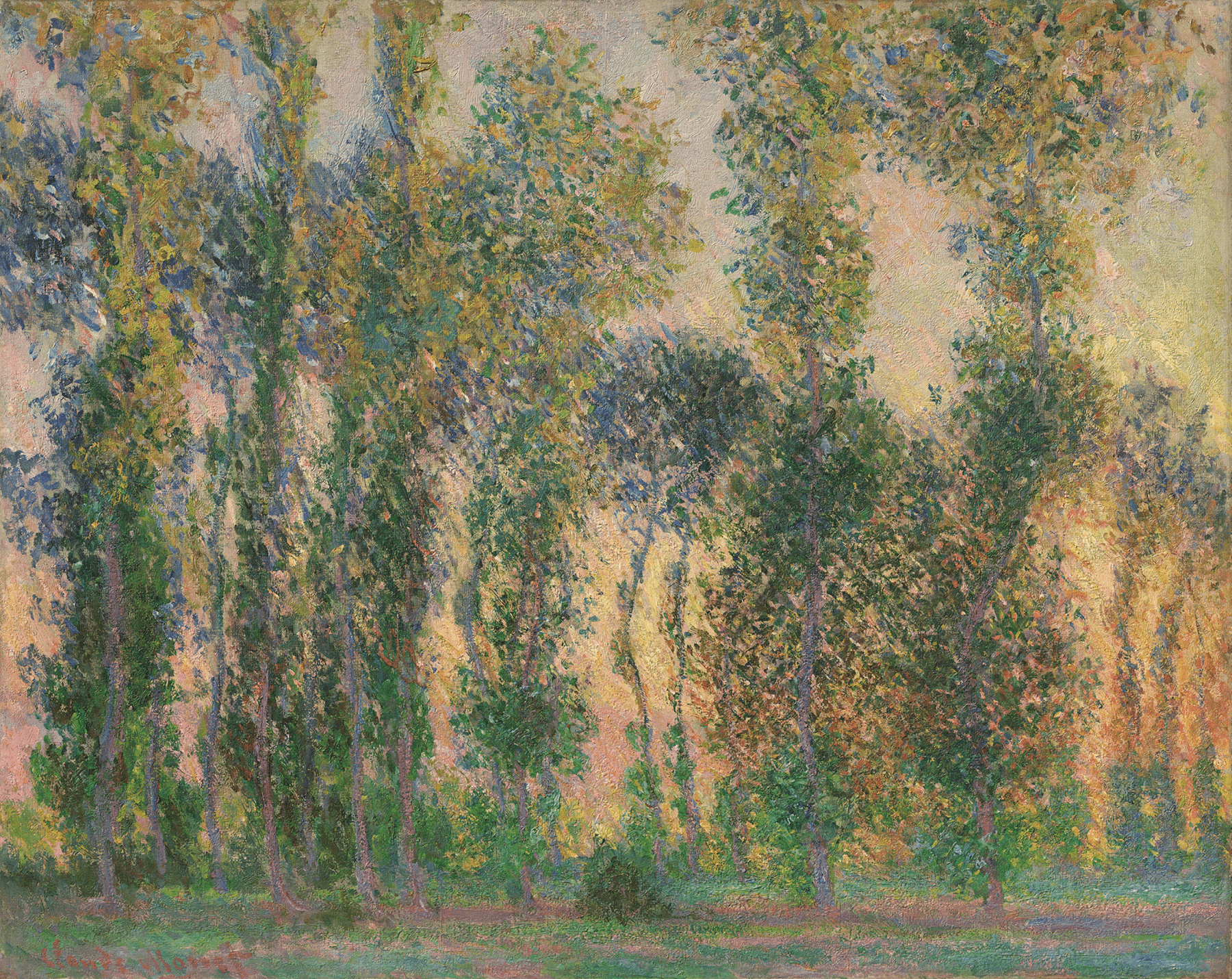
- Claude Monet (1840-1926)
- Les Peupliers à Giverny, 1887.
- Huile sur toile, 74 x 92,5 cm
Potsdam, Museum Barberini, Collection Hasso Plattner - © Hasso Plattner Collection
Patronage
Our patrons and partners
The museum warmly thanks the patrons and partners of this exhibition.
Patrons




Media partners






See more about Impressionism
The museum invites you to discover the multiple facets of impressionism.
Exhibition in progress
Invitation
to Daniel Buren,
"Plantations": in situ works, 2026 / Collections
from July 17, 2026 to November 1, 2026
See more